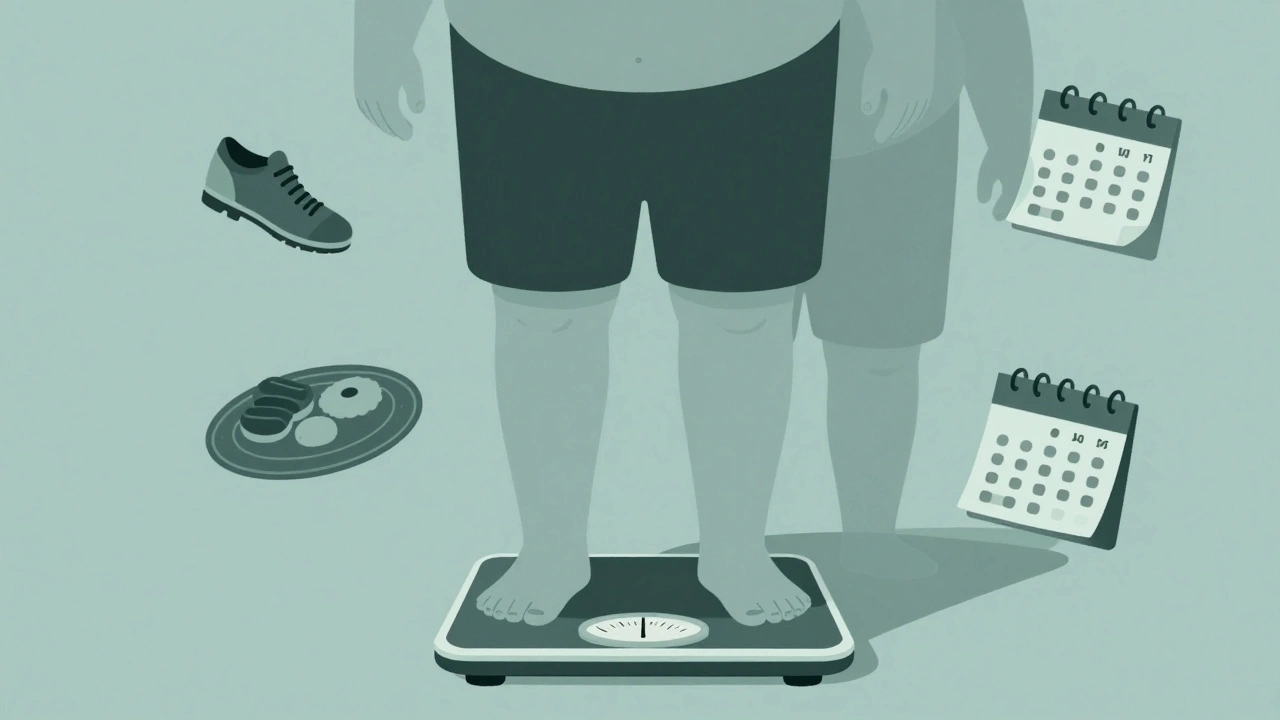
Most people who lose weight eventually gain it back. Not because they lack willpower, but because their bodies fight to return to their old weight. This isn’t laziness. It’s biology. After you lose weight, your metabolism slows down, hunger hormones spike, and your brain pushes you to eat more. Studies show only 25% of people manage to keep off the weight they lost after a diet. The rest? They’re not failing-they’re fighting an invisible biological force.
Why Weight Regain Isn’t Your Fault
When you lose weight, your body doesn’t treat it like a victory. It treats it like a threat. Your fat cells shrink, but they don’t disappear. And your body responds by lowering your resting metabolic rate by 15-25%-more than what you’d expect just from losing pounds. That means you burn fewer calories at rest than someone who never lost weight, even if you’re the same size now. Leptin, the hormone that tells your brain you’re full, drops by nearly half after a 10% weight loss. Ghrelin, the hunger hormone, rises. You feel hungrier, less satisfied after meals, and more drawn to high-calorie foods. This isn’t weakness. It’s evolution. Your body is trying to survive what it sees as a famine. Dr. Rudy Leibel from Columbia University calls this the body’s “defended weight set point.” And Dr. Eric Ravussin at Pennington Biomedical says the drive to regain weight is “powerful and persistent, likely lasting for years.” This isn’t a moral failure. It’s a physiological reality.What Actually Works: The Science of Keeping Weight Off
The National Weight Control Registry has tracked over 10,000 people who’ve lost at least 30 pounds and kept it off for a year or longer. Their habits aren’t flashy. They’re simple, consistent, and repeatable.- 90.6% exercise regularly-about 60 minutes a day, burning around 2,800 calories weekly. That’s not marathon training. It’s brisk walking, cycling, or dancing.
- 78.2% eat breakfast every single day. Skipping it doesn’t save calories-it leads to overeating later.
- 62.3% weigh themselves at least once a week. Daily weighing is even better. People who weigh themselves daily are 37% more likely to maintain loss than those who don’t.
- 75% watch less than 10 hours of TV a week. Sedentary time is linked to mindless snacking and lower activity.
Stop Thinking of Weight Loss and Maintenance as Two Phases
Most diets treat weight loss and maintenance like separate chapters. Lose weight first. Then, once you’re done, start maintaining. That’s a recipe for failure. Research from the University of Florida shows people start regaining weight the moment their diet ends. Why? Because they stop the behaviors that kept them losing. They stop tracking food. They stop moving. They think, “I earned a break.” The truth? Maintenance doesn’t start after you hit your goal. It starts on day one. If you’re trying to lose weight, you’re already in maintenance mode. Every meal, every walk, every scale check-it’s all part of the same long-term habit.
Behavioral Strategies That Actually Stick
Successful maintainers don’t rely on motivation. They rely on systems.- Daily weighing: One Reddit user wrote, “Weighing daily kept me accountable when I started slipping.” A small gain of half a pound is easy to fix. A gain of five pounds? Much harder.
- Meal timing: Eating at consistent times helps regulate hunger. Skipping meals or eating erratically spikes cravings.
- Pre-planning: 89% of successful maintainers plan meals ahead. That means packing snacks, knowing what’s for dinner, and avoiding impulsive takeout.
- Slip prevention: 76% of them have a plan for “what if I eat too much?” It’s not about perfection. It’s about recovery. One bad meal doesn’t ruin progress. One bad week does.
Commercial Programs: Do They Help?
Programs like WW (Weight Watchers) and Noom report success rates between 60-70% at six months. But look closer. These numbers often include people who lost weight during the program-not those who kept it off long-term. Independent studies show most regain within two years. WW’s “Beyond the Scale” maintenance program scores 4.2/5 in user reviews. Noom’s maintenance content? 3.8/5. Both are better than nothing, but neither solves the biological problem. They’re tools, not cures. Pharmaceutical options like semaglutide (Wegovy) and tirzepatide (Zepbound) show dramatic results-15-20% weight loss with continued use. But they cost over $1,300 a month. And if you stop taking them, most people regain the weight. They’re not magic pills. They’re temporary supports for a long-term problem.How to Start Today (No Diet Required)
You don’t need to join a program or buy a supplement. You need to start three things:- Step 1: Weigh yourself every morning. Use the same scale, same time, same clothes. Don’t obsess over the number. Just notice trends. A 1-2 pound rise? Adjust your activity or cut back on snacks. Don’t wait for five.
- Step 2: Move every day. You don’t need the gym. Walk after dinner. Take the stairs. Dance while cooking. Aim for 60 minutes total. That’s less than you think.
- Step 3: Plan your meals. Spend 15 minutes on Sunday picking out lunches and snacks for the week. Keep healthy options visible. Hide the chips.

What About Holidays and Travel?
Holiday weight gain is real. Studies show people gain 0.8-1.2 kg between Thanksgiving and New Year’s. Vacations add another 1.5 kg over two weeks. But you can protect your progress:- Don’t fast before a party. Eat a protein-rich snack first.
- Fill half your plate with vegetables before going for carbs.
- Walk after meals-even 10 minutes helps.
- Don’t weigh yourself the day after a feast. Wait 3-4 days. One day won’t change your trend.
The Bigger Picture: It’s Not Just About You
Dr. Yoni Freedhoff says the real problem isn’t individual willpower-it’s our environment. We live in a world built to make us gain weight: oversized portions, cheap processed food, ads for junk, and no time to cook. You can’t fix that alone. But you can build your own small, healthy bubble: keep fruit on the counter, cook at home more, turn off food ads on streaming services, surround yourself with people who support your habits. Weight maintenance isn’t about being strong. It’s about being smart. It’s about understanding your biology and working with it-not against it.What’s Next?
The future of weight maintenance isn’t in pills or programs. It’s in combining them. The NIH just invested $150 million into research on long-term maintenance. Experts predict that by 2027, the best results will come from using medications like semaglutide alongside behavioral support-not instead of it. But for now, the tools you need are already here: your body, your mind, and a few simple daily habits. You don’t need to be perfect. You just need to be consistent.Keep moving. Keep weighing. Keep planning. And remember-you’re not fighting to stay thin. You’re fighting to stay healthy.


Comments (14)