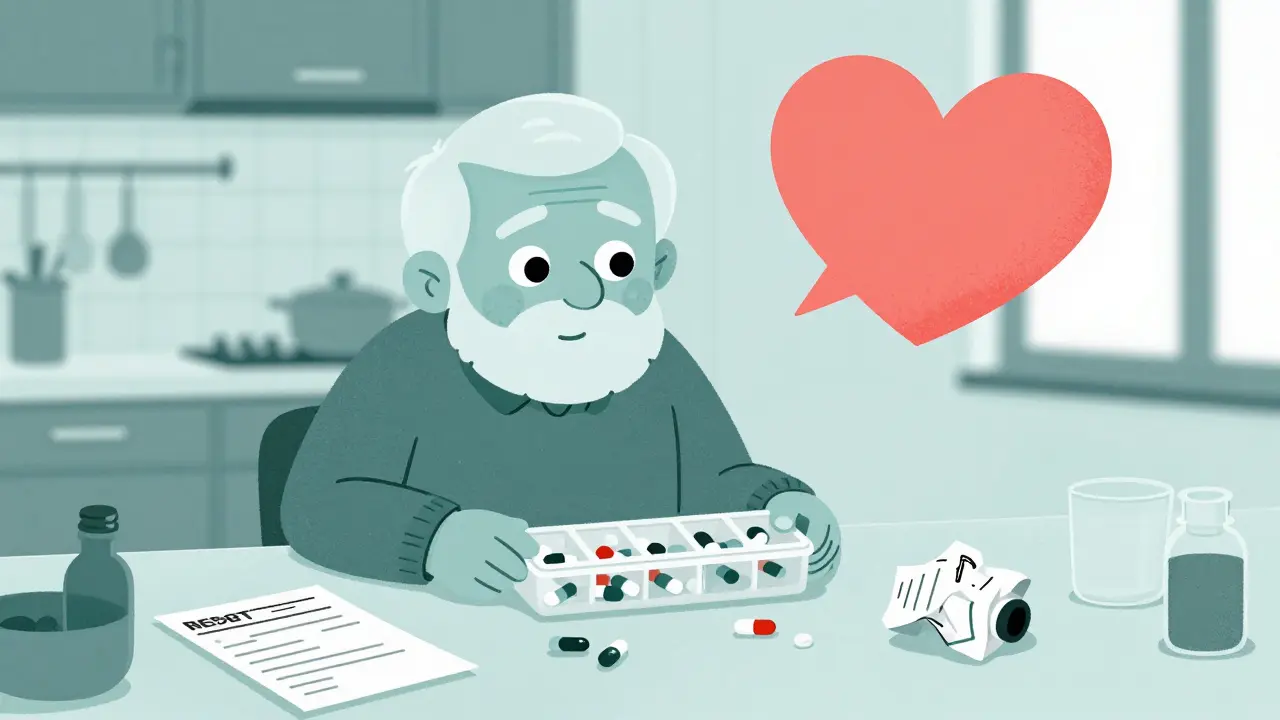
Every year, more than 1.5 million people in the U.S. end up in the emergency room because of problems with their medications. That’s not a typo. These aren’t rare accidents-they’re preventable mistakes that happen because the system isn’t designed to catch them. And it’s not just hospitals. It’s your kitchen counter, your pill organizer, your doctor’s office, and even your pharmacy counter. Medication safety isn’t a buzzword. It’s the difference between getting better and getting worse-or worse, dying from something that shouldn’t have happened.
What Exactly Is Medication Safety?
Medication safety means making sure you get the right drug, in the right dose, at the right time, in the right way-and that nothing bad happens because of it. It’s not just about doctors writing clear prescriptions. It’s about every single step: how the drug is made, stored, prescribed, filled, given to you, and monitored after you take it. The whole process has nine stages, and any one of them can go wrong. The Institute of Medicine calls a medication error “any mistake that happens during the medication-use process.” That includes giving you the wrong pill, the wrong amount, the wrong timing, or even missing a drug you actually need. The CDC defines the result of these errors as an adverse drug event (ADE)-anything from a mild rash to a heart attack caused by a drug interaction. It’s not just about bad luck. Most errors are caused by system flaws-not bad people. A nurse rushing because she’s short-staffed. A label that looks too similar to another drug. A doctor typing “10 mg” but meaning “1 mg.” A patient skipping doses because they can’t afford it. These aren’t isolated incidents. They’re built into how care is delivered.Why Should You Care? The Real Numbers
Let’s put this in human terms. In U.S. hospitals alone, 400,000 preventable medication errors happen every year. That’s more than the population of many cities. Of those, about 100,000 to 200,000 people die each year because of them. That’s more than car accidents or breast cancer deaths. And it’s not just hospitals. Outpatient clinics, nursing homes, and even home care settings contribute to this toll. The cost? Around $42 billion a year. That’s money spent on extra hospital stays, emergency visits, and long-term care that never should have been needed. And it’s not evenly distributed. Children under 18 make up 20% of all medication-related ER visits. Seniors over 65? They account for half of all hospitalizations due to adverse drug events. Why? Because they often take five or more medications at once. More drugs = more chances for something to go wrong.The Most Dangerous Medications
Not all drugs are created equal when it comes to risk. Some are so powerful-or so easy to misuse-that even small mistakes can be deadly. These are called high-alert medications, and they include:- Insulin (responsible for 17% of serious errors)
- Opioids like morphine and oxycodone (14%)
- Anticoagulants like warfarin and heparin (12%)
- Intravenous oxytocin (used during labor, linked to severe maternal harm if dosed wrong)
How Errors Happen: The Real Story
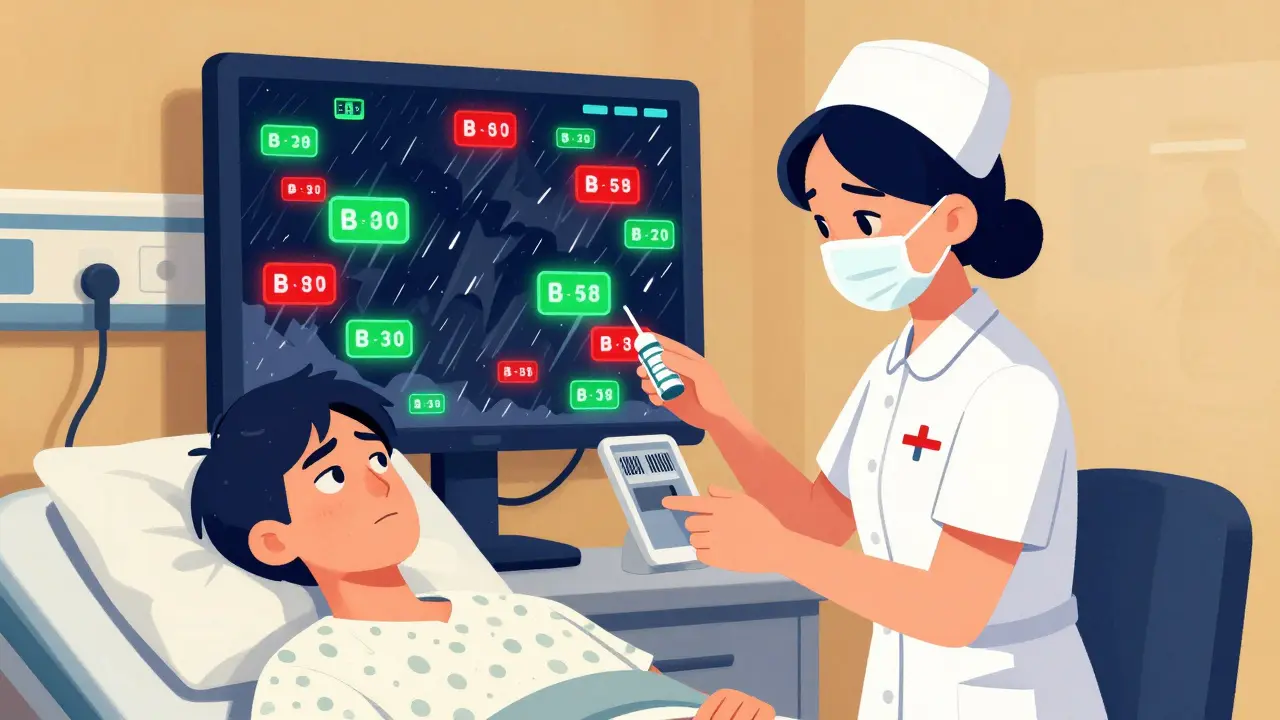
Most people think errors happen because someone was careless. But data tells a different story. According to The Joint Commission:- 38% of errors happen during prescribing
- 26% happen during administration (when the drug is given to you)
- 16% happen during dispensing (at the pharmacy)
What You Can Do: Your Role in Medication Safety
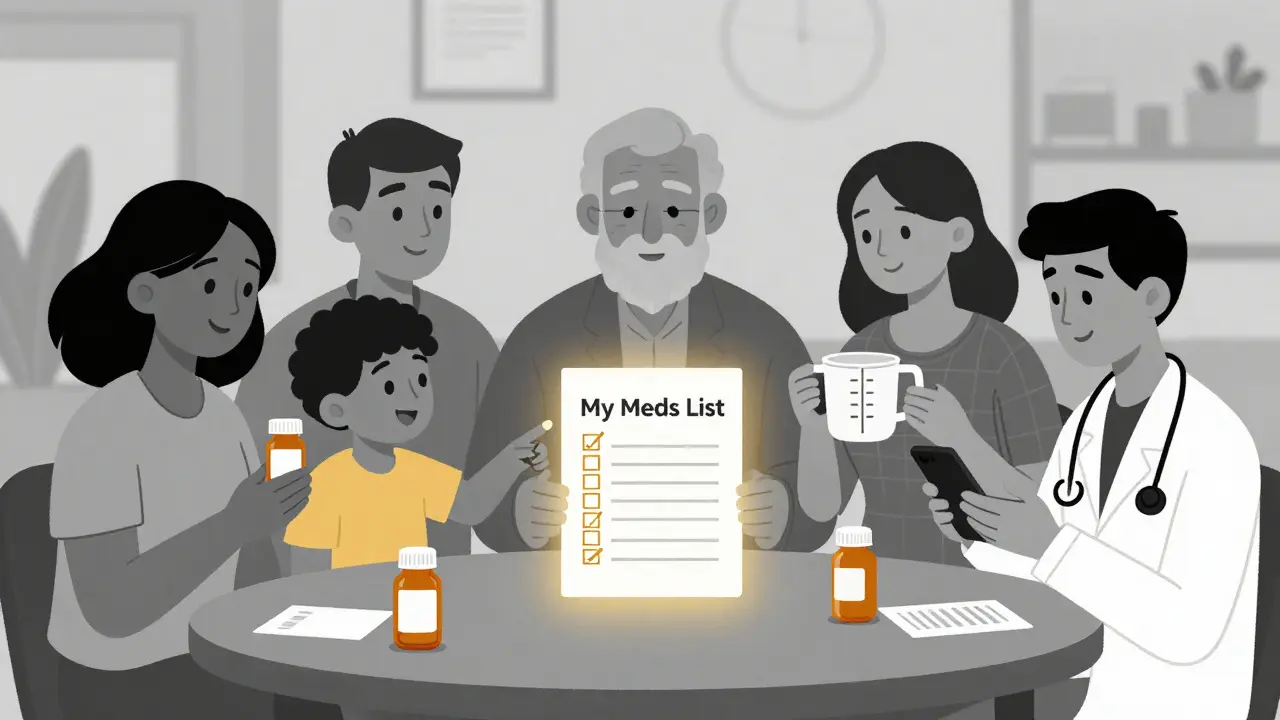
You’re not just a passive recipient of care. You’re the last line of defense. Here’s what actually works:- Keep a current list of every medication you take-including vitamins, supplements, and over-the-counter drugs. Update it every time something changes. The CDC says patients who do this reduce medication reconciliation errors by 45% during hospital transitions.
- Ask questions. “What is this for?” “What side effects should I watch for?” “Can this interact with my other meds?” If your doctor doesn’t have time, ask the pharmacist. They’re trained for this.
- Use pill organizers or blister packs. AARP found patients using them had 60% better adherence.
- Don’t guess dosages. If your liquid medicine says “5 mL,” use the measuring cup that came with it-not a kitchen spoon. Most household spoons hold between 3 and 7 mL. That’s a 40% error right there.
- Speak up if something feels off. If you feel dizzy after a new pill, if your skin turns yellow, if you’re confused-call your provider. Don’t wait.
How Technology Is Helping (And Where It Falls Short)
Electronic health records (EHRs) with built-in alerts have cut serious medication errors by 48%. Barcode scanning at the bedside cuts administration errors by 65%. That’s huge. But technology isn’t magic. Too many alerts? That’s called “alert fatigue.” When a nurse gets 25+ pop-ups per patient, they start ignoring them. Studies show that’s a 30% drop in effectiveness. And not every system talks to each other. Your primary care doctor’s EHR might not connect with the hospital’s. Your pharmacy’s system might not know about the new drug your specialist prescribed. That’s where you come in. You’re the only one who has the full picture.What’s Being Done-and What’s Not
The World Health Organization launched “Medication Without Harm” in 2017. Their goal? Cut severe, avoidable medication harm by 50% by 2027. Countries that fully joined the program saw a 15-25% drop in harm within two years. In the U.S., hospitals are required by The Joint Commission to do medication reconciliation-checking your full list every time you move between care settings. Medicare penalizes hospitals with high rates of preventable ADEs. But here’s the gap: only 35% of hospitals have non-punitive reporting systems. That means if a nurse makes a mistake, she fears getting fired-not being helped. So she hides it. And the system never learns. Dr. Lucian Leape from Harvard put it best: “Medication safety is no longer just about catching errors. It’s about designing systems that make errors impossible to commit.”The Bottom Line
Medication safety isn’t just a hospital policy. It’s your right. It’s your responsibility. And it’s something you can control. You don’t need to be a doctor. You don’t need to memorize drug names. You just need to be informed, ask questions, keep a list, and speak up when something doesn’t feel right. Every time you check your pill bottle against your list. Every time you ask your pharmacist about a new side effect. Every time you tell your doctor you skipped a dose because you couldn’t afford it-you’re helping prevent a disaster. And the data shows it works. Patients who use the CDC’s medication list template report 73% fewer errors during hospital stays. Those who use blister packs take their meds correctly 60% more often. Medication safety isn’t about perfection. It’s about reducing risk. And you’re the most important part of that equation.What is the most common cause of medication errors?
The most common cause is prescribing errors, which account for 38% of all medication mistakes. These often happen because of unclear handwriting, similar drug names, incorrect dosing (like typing 10 mg instead of 1 mg), or not checking a patient’s full medication list. But errors also occur during administration (26%) and dispensing (16%).
Who is most at risk for medication errors?
Older adults (65+) are the most vulnerable-they make up half of all medication-related hospitalizations because they often take five or more medications daily. Children are also at high risk, accounting for 20% of emergency visits due to ADEs. Pregnant women and people with chronic conditions like diabetes or heart disease are also at increased risk due to complex drug regimens and potential interactions.
Can I really prevent medication errors on my own?
Yes. Keeping an updated list of all your medications-including supplements and OTC drugs-and sharing it with every provider cuts reconciliation errors by 45%. Asking questions like “Why am I taking this?” and “What side effects should I watch for?” helps catch mistakes before they happen. Using a pill organizer or blister pack improves adherence by 60%, reducing the chance of self-induced errors.
What are high-alert medications?
High-alert medications are drugs that carry a higher risk of serious harm if used incorrectly. These include insulin (17% of serious errors), opioids like morphine (14%), anticoagulants like warfarin (12%), and IV oxytocin used during labor. Even small dosing mistakes with these drugs can lead to death or permanent injury.
How do hospitals try to prevent medication errors?
Hospitals use electronic prescribing, barcode scanning at the bedside, clinical decision support systems in EHRs, and medication reconciliation at every transition of care. The “Five Rights” (right patient, drug, dose, route, time) are standard, and many now add three more: right documentation, right reason, and right response. But only 55% of U.S. hospitals have fully integrated decision support systems, and staff resistance to new tech remains a barrier.
Are there any new technologies improving medication safety?
Yes. AI systems are being tested to predict potential drug interactions or dosing errors before they happen-early pilots show up to a 40% reduction in potential adverse events. Blockchain is being used in Europe to track drug supply chains and cut counterfeit medications by 65%. The FDA also now requires standardized numeric dosing on labels, which reduced decimal point errors by 32% in trials.


Comments (10)