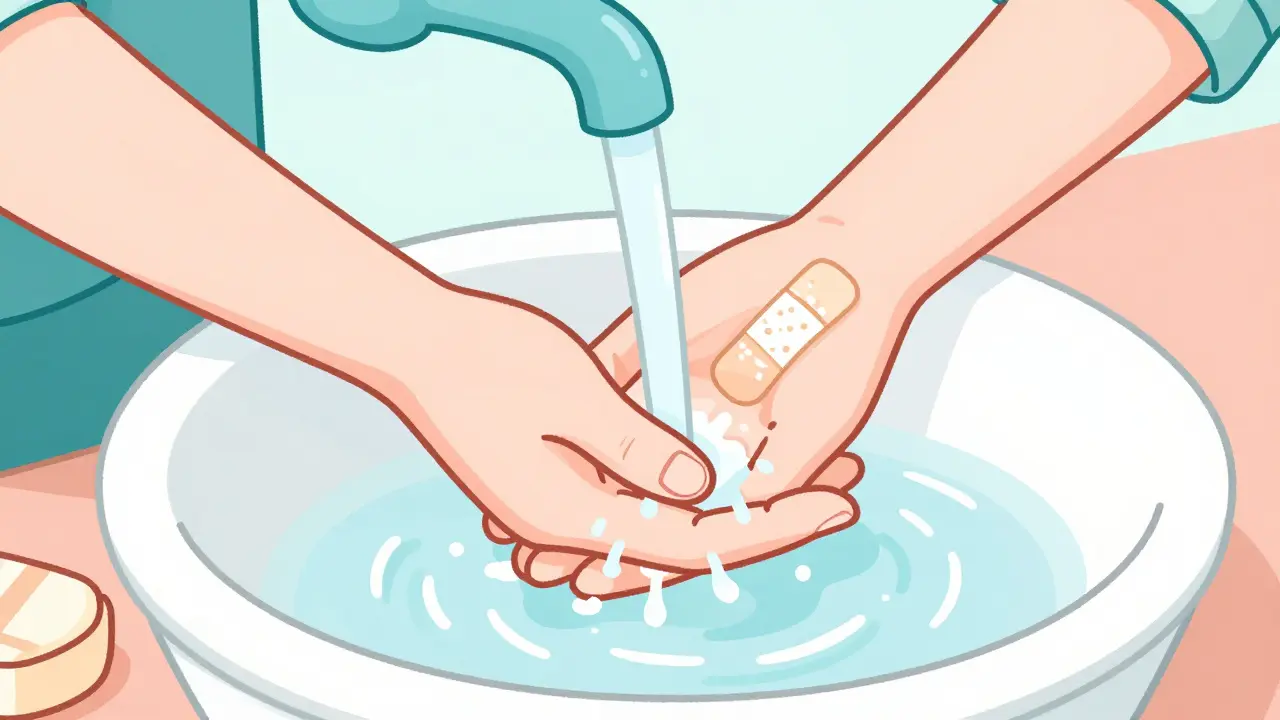
Why Proper Wound Care Matters
Most cuts, scrapes, and minor burns heal on their own-but only if they’re cared for the right way. Poor wound care doesn’t just slow healing; it raises your risk of infection, increases pain, and leaves behind noticeable scars. The CDC estimates that over 6.5 million Americans deal with chronic wounds every year, costing the healthcare system more than $25 billion. The good news? Following simple, science-backed steps can cut infection rates in half and reduce scarring by up to 70%.
How Wounds Heal: The Four Stages
Healing isn’t just about covering a wound. It’s a complex, four-stage process that happens inside your body. Knowing these stages helps you understand why certain care steps matter.
- Hemostasis (0-3 hours): Your body stops the bleeding by forming a clot.
- Inflammation (0-3 days): White blood cells rush in to fight germs and clear debris. This is when swelling and redness happen.
- Proliferation (3-21 days): New skin and tissue start growing. Collagen builds up to close the gap.
- Remodeling (21 days to 1.5 years): The scar tightens and strengthens. This is when scar prevention matters most.
Skipping steps in this process-like letting a wound dry out or pulling off a bandage too soon-can disrupt healing and lead to complications.
How to Clean a Wound Correctly
Many people think they should pour hydrogen peroxide or rubbing alcohol on a cut. That’s a mistake. These products don’t kill germs any better than plain water-they actually damage healthy tissue and delay healing by up to 50%.
Here’s what works:
- Wash your hands with soap and water for at least 20 seconds-or use hand sanitizer with at least 60% alcohol.
- Rinse the wound under cool, running water for 5 to 10 minutes. The flow should be gentle but steady, around 8-15 psi (pounds per square inch). This pressure removes dirt and bacteria without tearing new tissue.
- Use mild soap to clean the skin around the wound, not inside it. Gently pat the area dry with a clean towel.
- If there’s visible debris (like gravel or glass), use tweezers cleaned with alcohol to remove it. Don’t dig around.
Studies show that rinsing under running water reduces infection risk by 40% compared to soaking or wiping. And if you do this within the first hour after injury, you cut infection chances even further.
Choosing the Right Dressing
A bandage isn’t just a cover-it’s part of the healing system. The goal? Keep the wound moist, not wet or dry.
Here’s how to pick the right one:
- Small, shallow cuts: Use a simple adhesive bandage or gauze with petroleum jelly or bacitracin ointment. Petroleum jelly works just as well as antibiotic ointment for most people and causes fewer allergic reactions.
- Wounds with drainage: Use absorbent dressings like alginate or foam. These soak up fluid without sticking to the wound.
- Dry or healing wounds: Hydrocolloid dressings (like DuoDERM) create a sealed, moist environment that speeds healing and reduces pain.
Change dressings daily-or sooner if they get soaked through. Never peel them off quickly. Instead, loosen the edges gently with water or saline. Pulling off a dry bandage can rip off new skin and restart bleeding.
Also, never wrap tape all the way around an arm or leg. That can cut off circulation and cause serious damage. Leave a little space for swelling.

Scar Prevention: What Actually Works
Scars are inevitable after deeper wounds-but you can make them much less noticeable.
Start when the wound closes:
- Keep the area moisturized with petroleum jelly or a fragrance-free ointment. A 2021 study in the Journal of the American Academy of Dermatology found this reduces scar formation by 60%.
- After 14 days, switch to silicone gel sheets or silicone-based ointments. These have been shown to reduce hypertrophic scars by 50-60% in clinical trials.
- Protect the area from the sun. UV rays trigger dark pigmentation in healing skin. Use SPF 30+ sunscreen every day for at least 12 months after the wound heals.
Pressure therapy also helps-especially for burns or surgical scars. Wearing a compression garment or silicone pad over the scar for 12 hours a day can flatten and soften it over time.
When to Call a Doctor
Most minor wounds heal fine at home. But some need professional care. Look for these red flags:
- Redness spreading more than an inch from the wound-this could be cellulitis.
- Pus or cloudy fluid oozing from the wound.
- Fever above 100.4°F (38°C).
- The wound isn’t improving after 7 days.
- The cut is deeper than 1/8 inch, longer than 1/4 inch, or on a joint that moves a lot.
- You have diabetes, poor circulation, or a weakened immune system.
Diabetic wounds are especially dangerous. People with diabetes heal 40% slower and are at higher risk of infection. Daily checks by a healthcare provider are often necessary.
Special Cases: Burns and Pressure Wounds
Burns: Run cool (not icy) water over the burn for 10-15 minutes. Never pop blisters-they protect the skin underneath. Cover loosely with sterile gauze.
Pressure injuries (bed sores): These happen when skin is pressed against a surface for too long. Prevention is key. Use pillows or foam pads to lift heels off the bed, and reposition every 2 hours. The National Pressure Injury Advisory Panel says this reduces pressure injuries by 65% in at-risk patients.

Hydration and Nutrition: The Hidden Factors
Healing doesn’t just happen on the surface. Your body needs fuel.
Drink at least 0.5 fluid ounces of water per pound of body weight every day. For a 150-pound person, that’s about 75 ounces-nearly 10 glasses. Dehydration slows healing by 25-30%.
Protein is essential too. Eggs, lean meat, beans, and dairy help rebuild tissue. Vitamin C (from citrus, peppers, broccoli) supports collagen. Zinc (found in nuts, seeds, shellfish) helps cell growth.
What’s New in Wound Care
The global wound care market is growing fast, hitting $9.8 billion in 2022. New tech includes:
- Silver-infused dressings: Reduce infection rates by 30% in trials-but cost $35-$50 per dressing.
- Smart dressings: Embedded sensors detect changes in pH or temperature that signal infection before you see symptoms. Twelve are currently in FDA review.
- Bioengineered skin: Lab-grown skin grafts are being tested for severe burns and diabetic ulcers.
For most people, though, the best tools are still the basics: clean water, gentle care, and patience.
Common Mistakes to Avoid
- Using alcohol or hydrogen peroxide on open wounds.
- Letting the wound dry out-scabs slow healing.
- Changing dressings too infrequently-or too often.
- Ignoring signs of infection.
- Skipping sun protection on healing skin.
Patients who follow the basics consistently report 94% satisfaction with healing speed and appearance, according to University of Wisconsin Health Services. Those who skip steps? 68% experience delays or complications.
Can I use antibiotic ointment on every wound?
Not always. Antibiotic ointments like bacitracin help prevent infection, but they can cause allergic reactions in about 8.7% of users. For most minor cuts, petroleum jelly works just as well and causes fewer skin reactions. Only use antibiotic ointment if the wound is dirty, deep, or you’re at higher risk for infection.
How long should I keep a wound covered?
Keep it covered until it’s fully closed and no longer oozing-usually 3 to 7 days for small wounds. Once the skin has sealed, you can leave it uncovered if it’s in a low-friction area. But keep it moisturized and protected from the sun.
Is it okay to let a scab form?
Scabs are natural, but they slow healing. A moist environment lets new skin grow faster. That’s why doctors recommend keeping wounds covered with ointment and a bandage instead of letting them dry out. Scabs can also lead to thicker, more noticeable scars.
Do I need to clean a wound every day?
Yes, clean it once a day when you change the dressing. Use mild soap and running water. Don’t over-clean-it can irritate new tissue. If the wound gets dirty or sweaty during the day, rinse it gently and reapply a fresh dressing.
Can I swim with a healing wound?
Avoid pools, lakes, and oceans until the wound is fully closed. Chlorine and saltwater can irritate it, and natural water often contains bacteria that can cause infection. If you must swim, cover the wound with a waterproof dressing and clean it thoroughly afterward.
Why does my wound feel itchy as it heals?
Itching is normal during the proliferation stage-new nerves and skin are growing. But don’t scratch. Rubbing or picking can reopen the wound or cause infection. Instead, apply a cool compress or moisturizer to soothe the area.


Comments (13)